Discover our journey
Every meaningful journey begins with a question. Ours began in Beijing, far from home, where a group of Pakistani women researchers found themselves asking the same thing: our country has so many gifted women in science, so why are so few of them ever seen? We couldn’t even answer a simpler version of it. We didn’t know how many Pakistani women were doing research alongside us in China, or in which fields they were quietly excelling. They were doing remarkable work, yet they remained invisible to one another.
That question became a purpose. Together, Dr. Arfa Abrar Malik, Dr. Arzoo Hassan, Dr. Sadia Ahmed, Dr. Hassina Tabassum, and a few others co-founded WEmpower Pakistan, a volunteer initiative built to find, connect, and uplift Pakistani women across science, engineering, and technology. We began with a simple belief: that talented women already have the brilliance and the drive; what they often lack is a platform of their own, a space to find each other, share their struggles openly, and grow through connections. What started as a few friends reaching out across universities in Beijing would grow into a network spanning two countries and, in time, would lead Dr. Arzoo Hassan and Dr. Arfa Abrar Malik to build something larger and more lasting.
We are proud to acknowledge the invaluable contributions of Qurat ul Ain Jaffery, Nighat Yousaf, Farzeen Shahid, Zunaira Urooj, Nawal Ashraf, Laraib Nisar, Sumbal Kaynat, Ufra Naseer, and Anam Ashraf. Their hard work, creativity, and unwavering support have played an important role in shaping the initiative and inspiring more girls to pursue opportunities in STEM.
It Began in Beijing
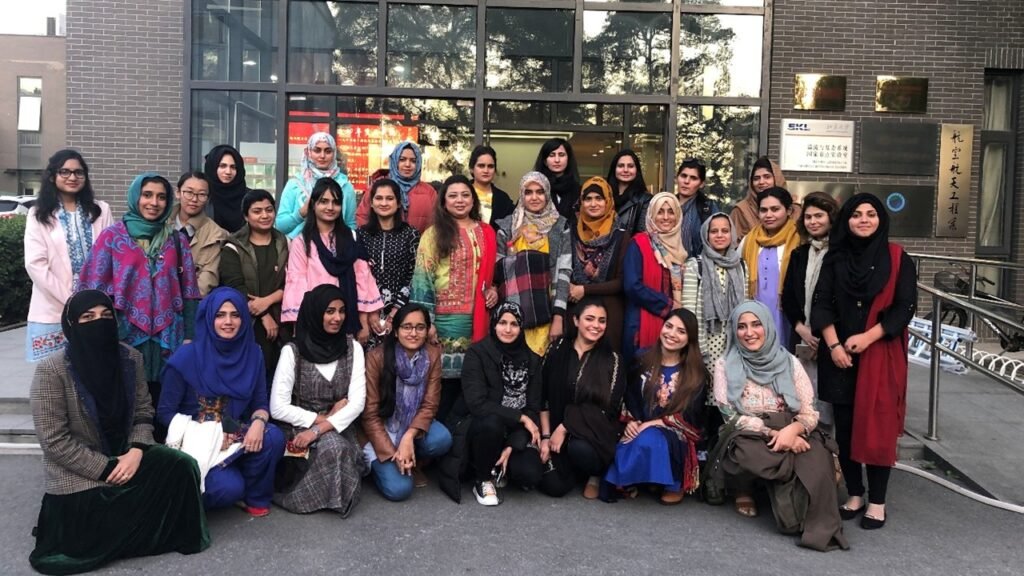
WEmpower Pakistan came to life on October 10th, 2019, at Peking University – our very first event, and an introduction of the initiative to the women we hoped to reach. The gathering opened, fittingly, with the national anthem of Pakistan. Dr. Arzoo Hassan gave the opening address and welcomed our speakers to the stage. Our guest speaker, Dr. Sonali Sachdeva, shared her research in astronomical physics, and Dr. Hassina Tabassum and Dr. Arzoo Hassan presented their own work alongside her. The theme, Cultural Representation of Pakistan in China, set the tone for everything that followed: science as a bridge, not a border. That first evening had a single purpose, and it was a success. Pakistani women researchers across Beijing now knew that WEmpower Pakistan existed, and that it existed for them.
Turning Awareness into Action
If the first event was about being seen, the second was about being equipped. Our core team met twice at the 1898 Cafe on the Peking University campus to plan it carefully, each member bringing ideas to make the day as useful as possible. The result was our Career and Professional Development Workshop, held at the Beijing Institute of Technology on December 1st, 2019, with guest speaker Courtney Castelli. The program was hands-on and practical — CV and cover-letter clinics, mock interviews, and career counseling, designed to turn ambition into opportunity. It reflected a belief that has stayed with us ever since: encouragement matters, but so do the concrete skills that open doors.
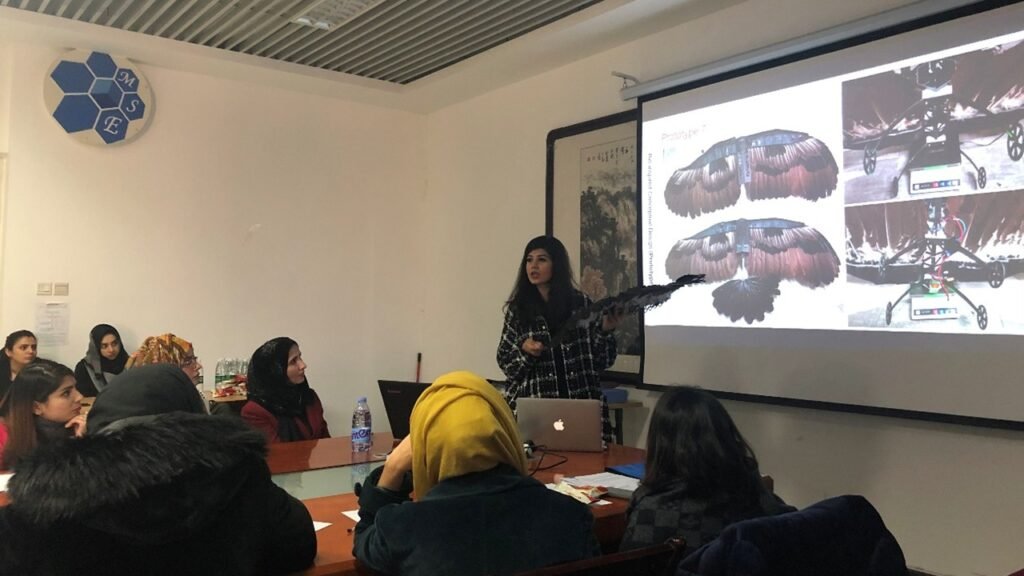
Within weeks, the initiative grew into something far larger than we had first imagined. On January 5th, 2020, the Institute of Chemistry, Chinese Academy of Sciences (ICCAS) — one of China’s foremost research institutions — hosted the WEmpower Research Conference 2020. The conference brought together young women researchers from universities across China to exchange the latest work in science, engineering, and technology, to share experiences in turning research into real-world impact, and to imagine new ways of bridging research and practice between China and Pakistan.
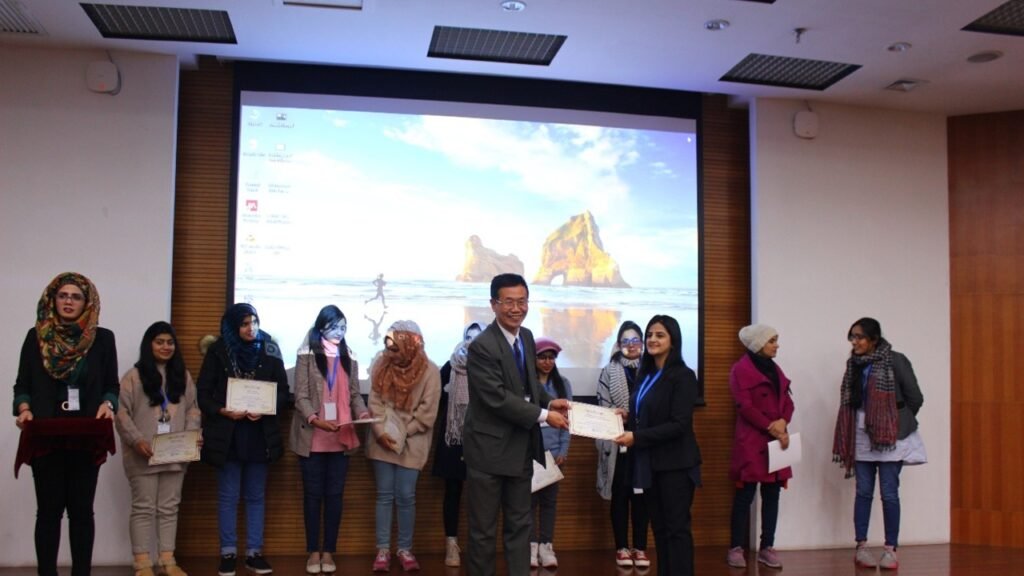
We were honored to have Professor Dr. Wen-Hua Sun, FRSC host the conference, with Dr. Sheng-Gui He, Assistant Director of ICCAS, delivering opening remarks that warmly encouraged young women toward research collaboration. The day moved through keynote talks, a guided visit to the NMR facility and History Hall of ICCAS, and a lively poster session featuring Pakistani researchers from universities across Beijing. It came together through the dedication of our core team across registration, media, poster coordination, and hosting — and it closed with a certificate ceremony celebrating every participant who stood up to present her work. More than a conference, it was proof of what this community could build when given a platform of its own. We remain deeply grateful to ICCAS, and especially to Professor Dr. Wen-Hua Sun, for believing in us.
Invited Seminar – Institute of Chemical Sciences
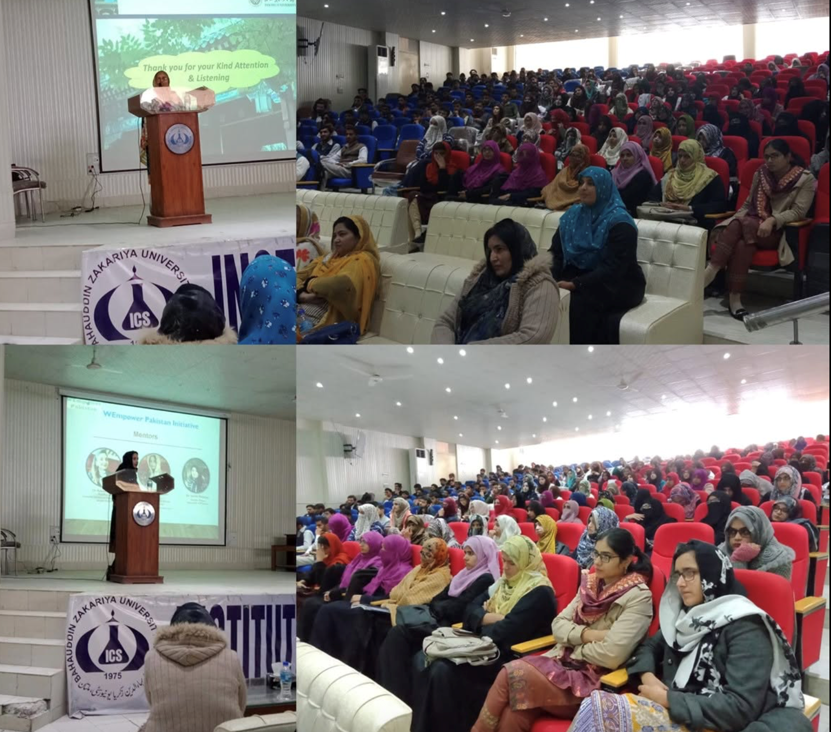
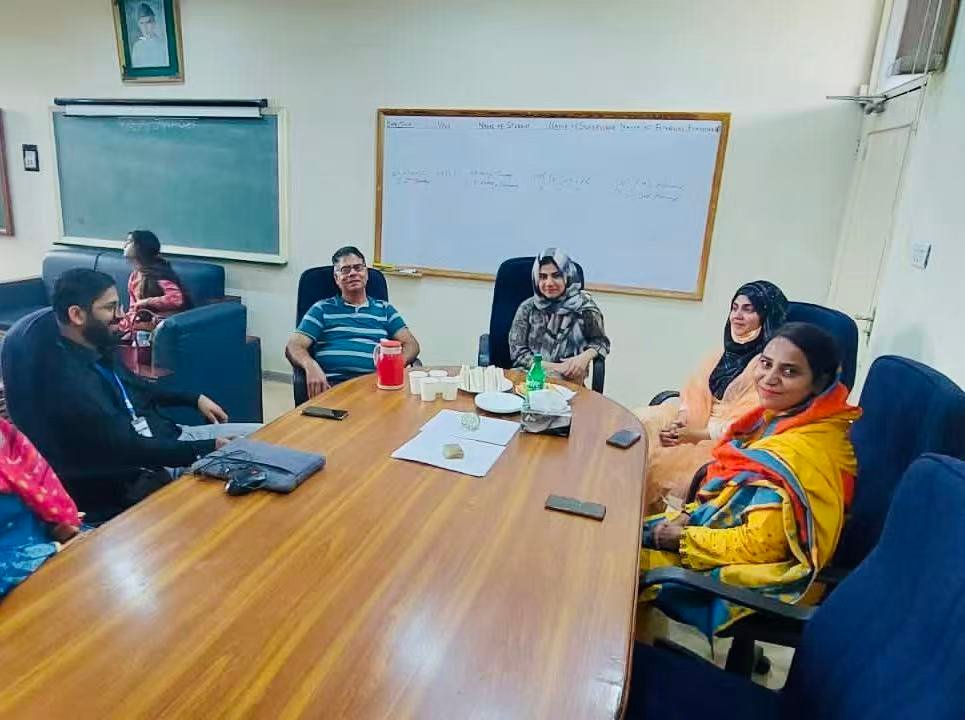
WEmpower Pakistan’s journey truly began to take root when the initiative was introduced to universities across Pakistan. One of the earliest milestones was an invited seminar organized by Dr. Laraib and Professor Naeem Ashiq at the Institute of Chemical Sciences.
During the seminar, Dr. Hassina Tabassum delivered an inspiring talk on Women in STEM, highlighting the importance of empowering women in science, technology, engineering, and mathematics. She also introduced the vision and mission of WEmpower Pakistan to the students and faculty members of the Institute of Chemical Sciences.
The initiative received overwhelming encouragement from both faculty and students. In particular, Prof. Dr. Muhammad Najam Ul Haq, Professor Farzana Mahmood, and Professor Muhammad Yaqoob expressed their strong support for the organization’s mission. Following the seminar, several students, along with Dr. Saadat Majeed, joined WEmpower Pakistan, marking the beginning of a growing community dedicated to advancing women in STEM across the country.
The WEmpower Pakistan journey was not without challenges, especially during the early efforts to introduce the initiative in universities located in under-resourced regions. In several academic settings where women in STEM were underrepresented, we faced structural and social barriers that affected participation and visibility.
During some online conference sessions, our speaking time was shortened, microphones were occasionally muted, or sessions were cut short under the justification of limited time. These experiences, while difficult, reflected the broader challenges of ensuring equal voice and presence in academic spaces, rather than isolated incidents.
Despite these obstacles, we remained consistent in delivering our message across different regions of Pakistan. Over time, we introduced a simple peer-support principle within the network: “I helped you, and you help the next five women students.” This approach helped create a cascading mentorship effect, strengthening collaboration and support among participants.
As a result, the WEmpower Pakistan network gradually expanded into a more resilient and supportive STEM forum, built through shared effort, persistence, and collective commitment to empowering women in science and engineering.
Government Graduate College, Jhelum (March 2020)
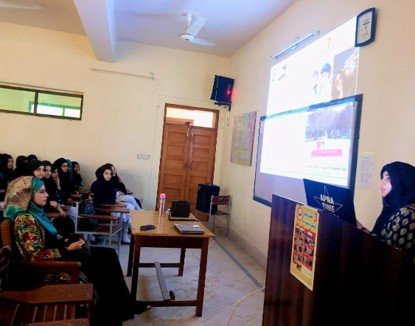
The vision had always been to build a bridge from China back to Pakistan, and in March 2020, that bridge took shape. Dr. Arfa Abrar Malik was invited as a guest speaker to the Department of Chemistry at Government Graduate College Jhelum, where she spoke about higher-education opportunities in China and introduced the WEmpower Pakistan initiative. Standing before undergraduate students, she encouraged them to apply for international scholarships and to seek out programs that support women in STEM. It was a full-circle moment: the very kind of encouragement so many of us had wished for as students was now being carried directly to the next generation, at home.
International Islamic University, Islamabad
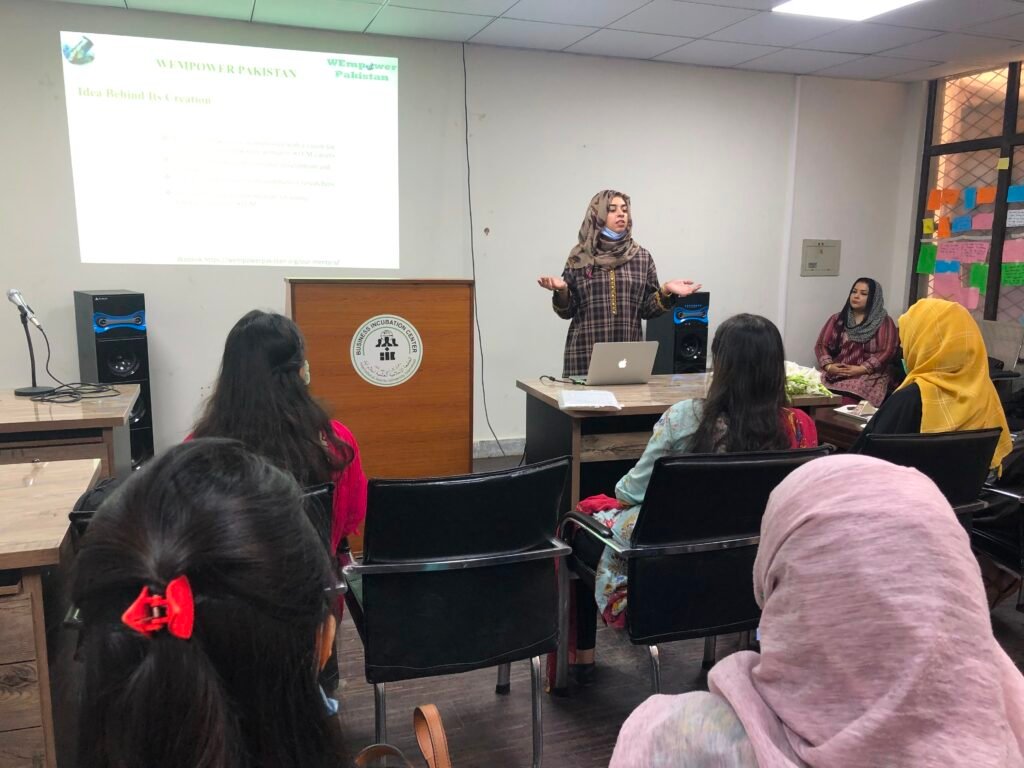
In October 2020, we organized a Professional Development Workshop at International Islamic University, Islamabad, formally introducing WEmpower Pakistan to students and researchers in the country we had set out to serve from the very start. The workshop carried forward the same practical spirit as our earlier events in Beijing, equipping attendees with real skills alongside real encouragement, while marking an important shift: WEmpower Pakistan was no longer just a network of women researchers abroad, but a growing community with roots on home soil.
CoMSID 2022 — Conference on Materials and Sustainable Industrial Development (March 2022)
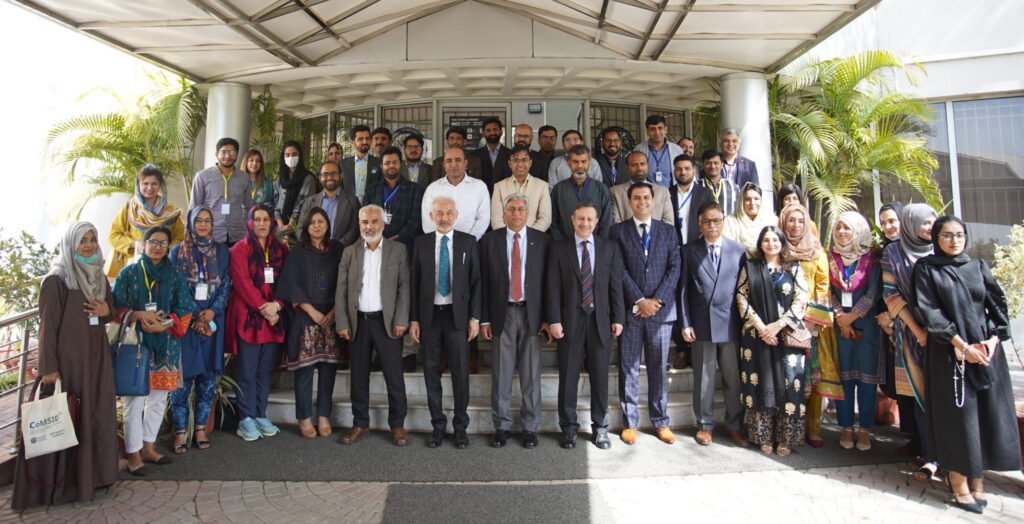
On March 14th, 2022, WEmpower Pakistan co-organized CoMSID 2022 the Conference on Materials and Sustainable Industrial Development at the SCME Auditorium, NUST, Islamabad, in partnership with NUST’s School of Chemical and Materials Engineering. The one-day conference brought students, academics, and industry leaders together to discuss advances in nanotechnology and sustainable materials, and to strengthen the working relationship between Pakistan’s universities and its industrial sector.
The conference was chaired by Dr. Arzoo Hassan and Dr. Bilal Malik. Prof. Dr. Tahir Irfan Khan, Vice Chancellor of Abbottabad University, attended as Chief Guest, alongside Guests of Honour Prof. Dr. Mohammad Mujahid, Rector of Pak-Austria Fachhochschule, and Prof. Dr. Humaira Masood Siddiqi, Department of Chemistry, QAU. The programme featured keynote and invited talks from international speakers Prof. David Brayden (University College Dublin) and Prof. Jawwad Darr (University College London), alongside national speakers Dr. Saadat Majeed and Prof. Husnain Janjua.
The day closed with an industry panel led by Dr. Arzoo Hassan and Dr. Arfa Abrar Malik, bringing together voices from outside academia — including Mr. Mujeeb Ahmed, Ms. Humera Malik, and Mr. Mohsin Hayat — to speak directly to the gap between research and industry that CoMSID 2022 set out to bridge.
Department of Chemistry, Quaid e Azam University (QAU), Islamabad
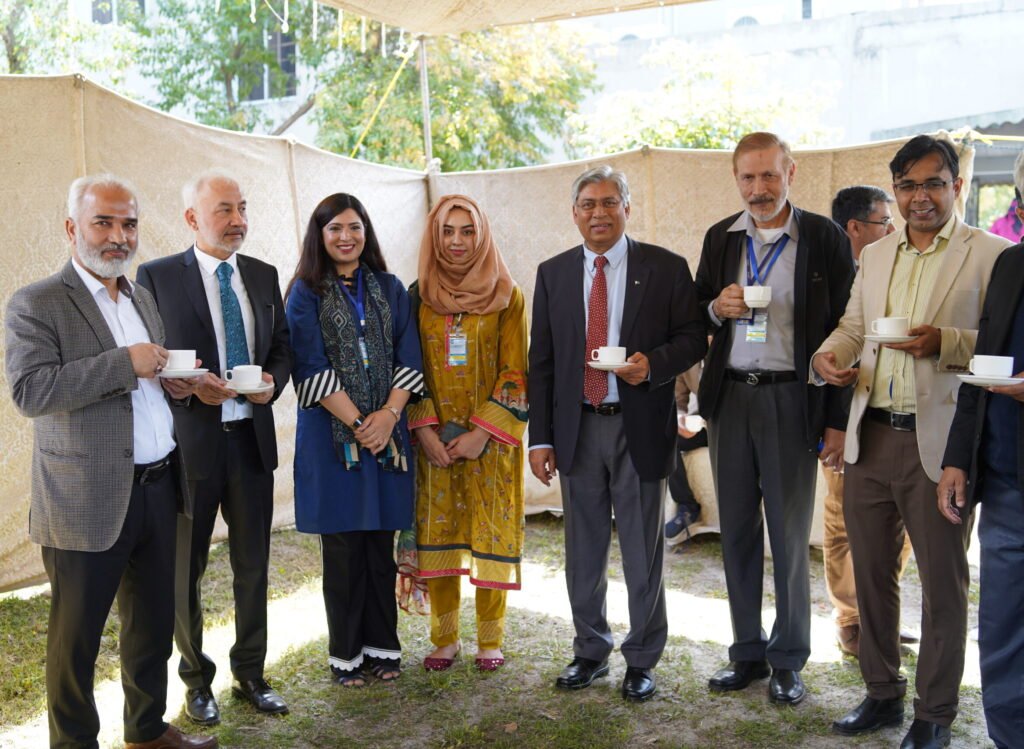
On September 28th, 2022, with the support of Prof. Dr. Aamer Saeed (Tamgha-i-Imtiaz), Chairperson of the Department of Chemistry at Quaid-i-Azam University (QAU), Islamabad, Dr. Arfa Abrar Malik organized a Professional Development Workshop at QAU. The session opened with Dr. Lubna Rasheed (University of Education) walking participants through essential tools for research, followed by a research talk from Dr. Zeeshan Ali (National University of Sciences and Technology, NUST). Together, the two sessions reflected WEmpower Pakistan’s growing focus on equipping researchers with both the practical tools and the intellectual grounding needed to advance their work.
The Next Chapter: IWISTER STEM
In 2023, Dr. Hassina Tabassum founded IWISTER STEM, carrying that same spirit into a new chapter. What began as an idea has since grown into a company with its own Board of Directors, built on the lessons learned in Beijing and across Pakistan. Its mission was clear from the start: to reach students, researchers, educators, and professionals around the world.
ACS Spring 2023 Conference in Indianapolis, USA
A Message That Crossed Oceans
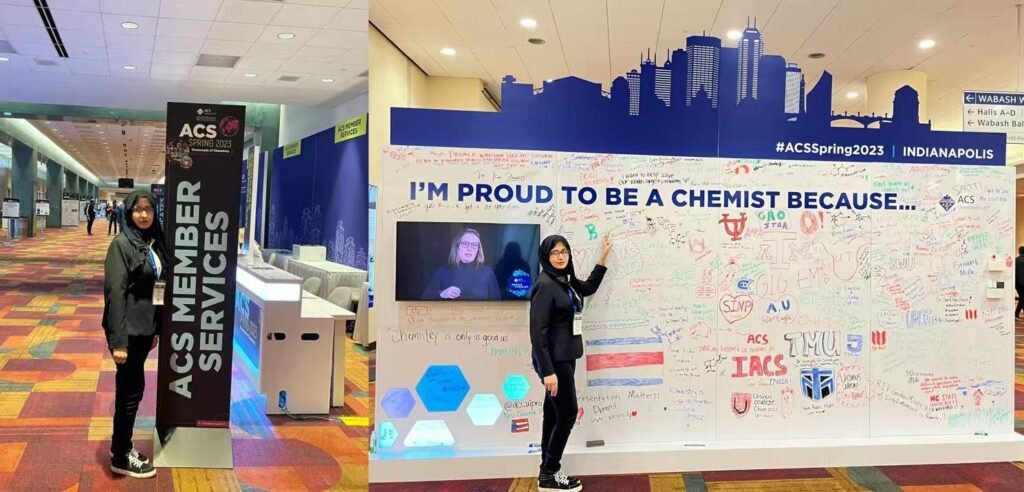
At the ACS Spring 2023 Conference in Indianapolis, USA, Dr. Hassina Tabassum introduced IWISTER STEM to the international scientific community for the first time during the Women in the Chemical Enterprise (WCE) Networking session. She shared IWISTER STEM’s founding vision of empowering women in STEM through mentorship, networking, leadership, and professional development while engaging with researchers, educators, and professionals from around the world to exchange ideas and build meaningful collaborations. This milestone marked the beginning of IWISTER STEM’s journey, which has since grown into a global platform that supports students, researchers, educators, and professionals across the STEM community.
Northeastern University, Boston USA (Jan 2025)
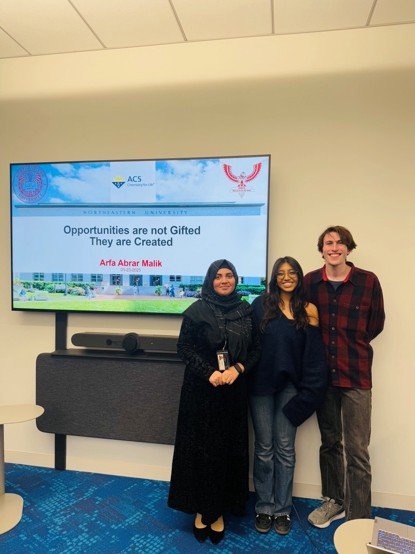
By January 2025, the reach of that first question in Beijing had stretched across the world. Dr. Arfa Abrar Malik was invited as a guest speaker at the Northeastern University Student Chapter of the American Chemical Society (NUSA ACS) in the United States, where she presented her research and shared the story of IWISTER STEM with a new audience. What had begun as a small circle of women researchers in China was now part of a conversation happening on another continent — a reminder that a platform built on connection knows no borders, and that the mission we started years earlier had only grown larger with time.